Research in our lab involves studies of magnetization reversal with microwave, heat, current, domain wall motions, etc. We study magnetic materials such as ferromagnets, antiferromagnets.
Spintronics
Spintronics is a new technology in solid-state devices which exploits the intrinsic spin of electrons and its associated magnetic moment in addition to its fundamental electronic charge.
Magnetization Reversal
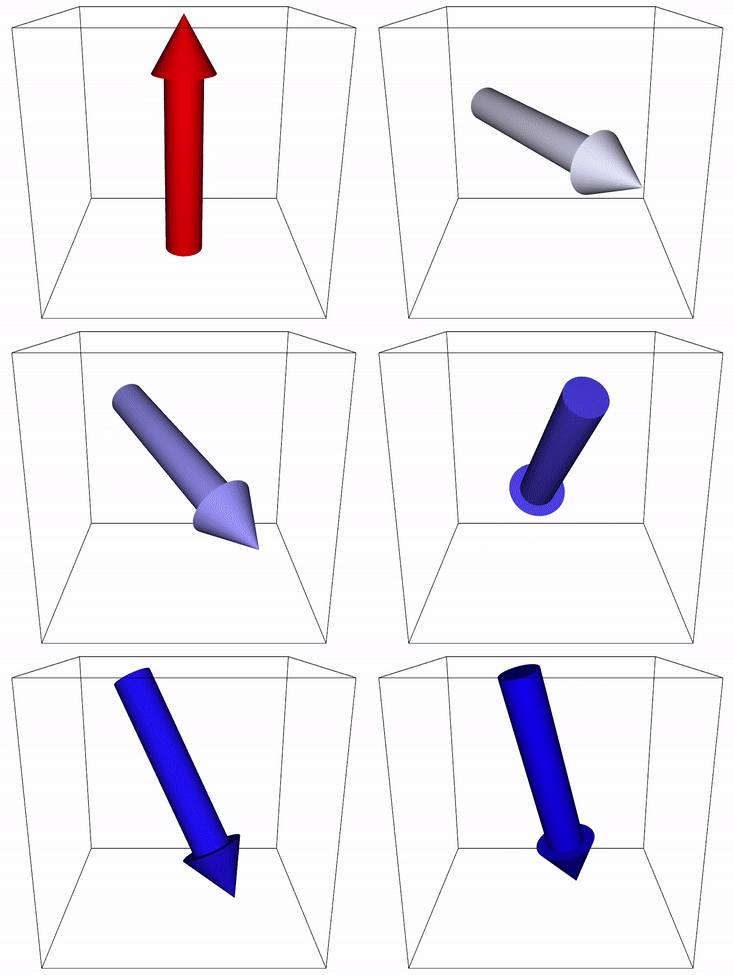 Magnetization reversal is a crucial technology in memory devices. Achieving fast and
energy-efficient magnetization reversal of high anisotropy materials has drawn much attention
since it has potential application in non-volatile data storage devices and fast data processing.
For high thermal stability and low error rate, high anisotropy materials are required in
device application. But one of the challenging issues is to find out the way which can
induce the fastest magnetization reversal with minimal energy consumption. Over the last two
decades, many magnetization reversal methods has been investigated, such as by constant
magnetic fields, by the microwave field of constant frequency, either with or without a
polarized electric current and by spin-transfer torque (STT) or spin-orbit torque (SOT).
However, all the means are suffering from their own limitations. For instance, in the case
of external magnetic field, reversal time is longer and has scalability and field localization
issues. In case of the constant microwave field driven magnetization reversal, the large field
amplitude and the long reversal time are emerged as limitations. In the case of the STT-MRAM,
the threshold current density is a large and thus, Joule heat which may lead the device
malfunction durability and reliability issues. Moreover, there are several studies showing
magnetization reversal induced by microwaves of time-dependent frequency.
Magnetization reversal is a crucial technology in memory devices. Achieving fast and
energy-efficient magnetization reversal of high anisotropy materials has drawn much attention
since it has potential application in non-volatile data storage devices and fast data processing.
For high thermal stability and low error rate, high anisotropy materials are required in
device application. But one of the challenging issues is to find out the way which can
induce the fastest magnetization reversal with minimal energy consumption. Over the last two
decades, many magnetization reversal methods has been investigated, such as by constant
magnetic fields, by the microwave field of constant frequency, either with or without a
polarized electric current and by spin-transfer torque (STT) or spin-orbit torque (SOT).
However, all the means are suffering from their own limitations. For instance, in the case
of external magnetic field, reversal time is longer and has scalability and field localization
issues. In case of the constant microwave field driven magnetization reversal, the large field
amplitude and the long reversal time are emerged as limitations. In the case of the STT-MRAM,
the threshold current density is a large and thus, Joule heat which may lead the device
malfunction durability and reliability issues. Moreover, there are several studies showing
magnetization reversal induced by microwaves of time-dependent frequency.
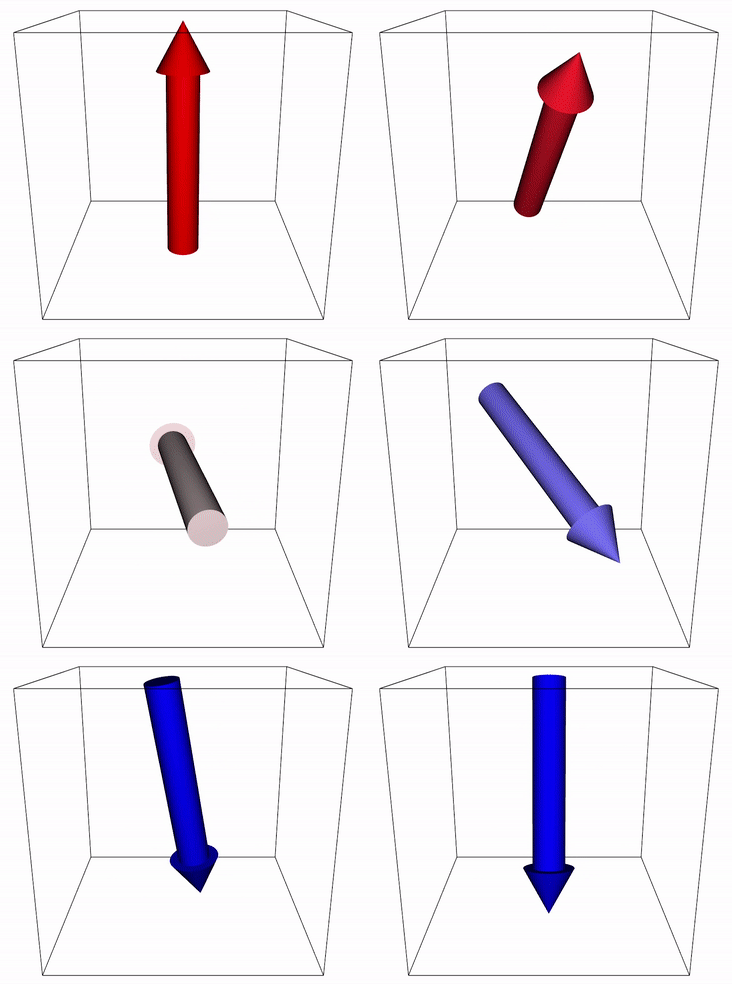
During his Ph.D., Dr. Md. Torikul Islam has demonstrated that the circularly polarized linear down-chirp microwave pulse (DCMP) (whose frequency linearly decreases with time from the initial frequency can drive fast magnetization reversal of uniaxial nanoparticles. The working principle of the above model is that the DCMP triggers stimulated microwave energy absorption (emission) by (from) the magnetization before (after) crossing the energy barrier. However, the efficiency of triggered microwave energy absorption or emission depends on how closely the frequency of chirp microwave pulse matches the magnetization precession frequency. In DCMP-driven case, the frequency linearly decreases from with time but, in fact, the decrement of magnetization precession frequency is not linear during magnetization reversal. So the frequency of DCMP only roughly matches the magnetization precession frequency. Thus, the DCMP triggers inefficient energy absorption or emission and the required microwave amplitude is still large.
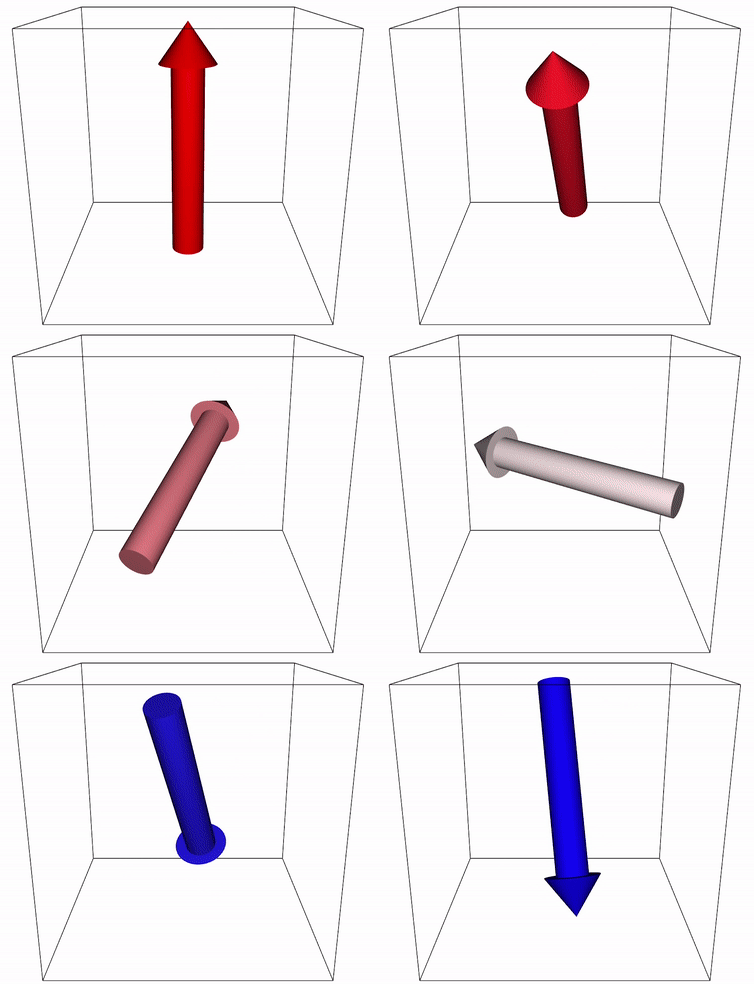 Therefore, to achieve more efficient magnetization reversal, we have found a microwave
pulse of proper time-dependent frequency that matches the intrinsic magnetization precession
frequency better. In our recent study, we demonstrate that a cosine chirp microwave pulse
(CCMP), defined as a microwave pulse whose frequency sweeps in a cosine function with time
in first half-period of the microwave pulse, is capable of driving the fast and energy
efficient magnetization reversal. This is because the frequency change of the CCMP matches
the nonlinear frequency change of magnetization precession better than the DCMP. In addition,
our study emphasizes how the shape anisotropy influences the required parameters of CCMP and
how the Gilbert damping affects the magnetization reversal. We find that the increase of
easy-plane shape anisotropy makes the magnetization reversal easier. The materials with
larger damping are better for fast magnetization reversal. These investigations might be
useful in device applications.
Therefore, to achieve more efficient magnetization reversal, we have found a microwave
pulse of proper time-dependent frequency that matches the intrinsic magnetization precession
frequency better. In our recent study, we demonstrate that a cosine chirp microwave pulse
(CCMP), defined as a microwave pulse whose frequency sweeps in a cosine function with time
in first half-period of the microwave pulse, is capable of driving the fast and energy
efficient magnetization reversal. This is because the frequency change of the CCMP matches
the nonlinear frequency change of magnetization precession better than the DCMP. In addition,
our study emphasizes how the shape anisotropy influences the required parameters of CCMP and
how the Gilbert damping affects the magnetization reversal. We find that the increase of
easy-plane shape anisotropy makes the magnetization reversal easier. The materials with
larger damping are better for fast magnetization reversal. These investigations might be
useful in device applications.
